Choosing Your Sewing Machine Needle
Author: Cheryl Kilbourne-Kimpton
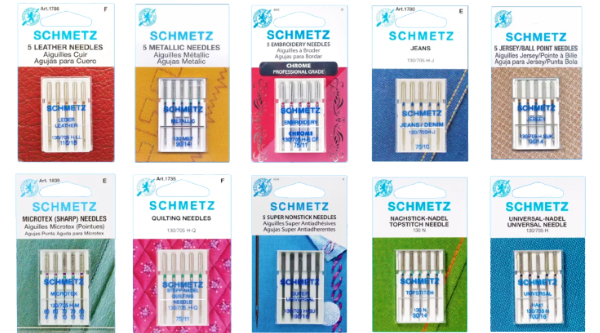
Have you ever stared at a wall of sewing machine needles and asked yourself, “What does this all mean?” Ball point? 70/10? It’s like it’s in a different language. You just want to hem a pair of pants, or maybe make a quilt. Which sewing machine needle is best for you?
How to Decipher Sizes:
In the United States, needle sizes range from 8 to 19, and in Europe they range from 60 to 120. The smaller the number, the finer the needle; so a 19 or a 120 will be very thick needles. If you look at a package of needles, you might see a number like “70/10”. This means it’s a size 70 needle in Europe, and a size 10 needle in the U.S. That’s a universal needle size. The finer the fabric and thread, the finer the needle size and likewise you’d use a thicker needle for thicker fabric or thread, like canvas.
On Universal Needles:
My mother rarely, if ever, changed her sewing machine needle. She usually used a Universal needle: these are good for woven and knit fabrics, and have a slightly rounded point — not as round as a ball point needle, but not as pointed as a sharp needle, either. She did, however, have on hand a few finer needles for when she was doing work with thin silk. Most of the time, a universal needle will serve you well, but you will get even better results if you use a specific needle for your fabric and project.
What kind of project are you completing?
This is a big question. For example: you are going to do a thick topstitch embroidery on a fine fabric? You might meet in the middle as far as needle sizes– a too-big needle will leave holes in the fabric, and a too-small needle will break with too-thick thread. Split the difference, and go for a needle somewhere in between– it might take a bit of experimentation.
What kind of needle tips are there?
It’s not just fabric thickness you need to consider, but other factors as well. There are needles specifically for knit fabrics (ball-point needles), stretch fabric, denim, precision (Microtex, or sharp needle), metallics, embroidery, quilting, top stitching, leather and other special features, like hemstitch needles. This is in addition to the size of the needles — take a look at this diagram to find out exactly which sizes each type of needle comes in.
What is the difference between a ball point and a sharp needle?
A ballpoint tipped needle is great for knit fabrics. It doesn’t break or damage the delicate knit fibers; instead, it slips between the fibers without piercing. The larger the needle, the more rounded the ball point is. A sharp needle, on the other hand, is great for a variety of fine fabrics– metallics, stretch, silk, artificial leather– and creates very sharp, precise stitches.
What other specialty needles are there?
You can also find quick-threading needles, which have a slip-in threading slot in the eye, and are a universal size. There are also double eye needles, which are great for embroidery and top stitching as well as twin needles, which involve two needles on one shaft, and use two spools of thread and one bobbin to create two rows of stitches simultaneously.
Most importantly:
Always replace a dull or damaged needle immediately. You’ll save yourself a ton of headaches (and dropped stitches) by keeping a stash of needles in your sewing kit so you are always prepared to replace when necessary. It will make your sewing experience smoother and more precise– and prevent frustration.
Need needles? We have a full line of Schmetz sewing machine needles at Manhattan Wardrobe Supply.