Giorgio Armani’s Legacy on the Silver Screen
Author: Emily Battles
The Legend
The fashion world lost a legend last week – Giorgio Armani passed at his home in Milan at the age of 91. Giorgio Armani’s legacy as the father of “quiet luxury” endures due to his proclivity for using beige and neutrals in his designs.

photo: Jaime Ardiles-Arce
Perhaps most recognized for his iconic suits, Armani truly became a household name after designing the wardrobe for Richard Gere in the movie American Gigolo (1980).
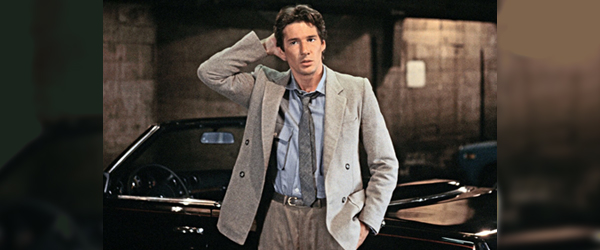
Photo: Movie Stills
According to GQ Magazine, “Gigolo director Paul Schrader was ahead of the curve. He knew just how to do it, how to bend the disco excesses of the Hollywood seventies—the open collars, the-jeans-with-jackets —into something supple and modern. Julian Kay had to travel between a world of rich people, wives of politicians and financiers, and a demimonde of pimps and rough trade: the suits had to travel with him, to change, as it were, with the light. Armani’s designs did that, just as they blew away the hirsute, aggressively “heterosexual” codings of the previous era… with something that felt equally flexible in terms of sexuality. They ended the seventies, it seemed, with a single stroke.”
Hollywood Influence
Though American Gigolo might have been Armani’s defining Hollywood moment, it was certainly not his last. He went on to design costumes for over 200 films, most notably:
- The Untouchables (1987)
- The Dark Knight (2008)
- Ocean’s Thirteen (2007)
His work extended to both men’s and women’s fashion in film, contributing to characters’ identities through clothing.
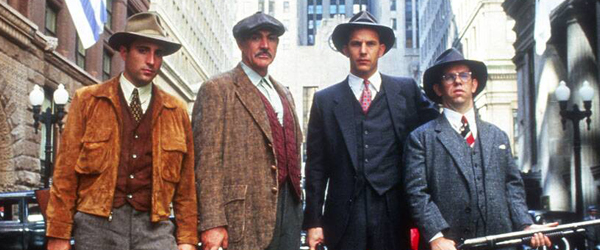
Photo: Paramount
For The Untouchables, Armani leaned into the Prohibition era aesthetic. He designed the costumes for Kevin Costner and Sean Connery by fusing period authenticity with his own signature style—sharp lines, understated elegance, and a sense of restrained power. The suits didn’t just fit the era; they elevated it, lending a modern gloss to the classic gangster aesthetic and helping De Palma infuse the film with a clean, polished visual language.
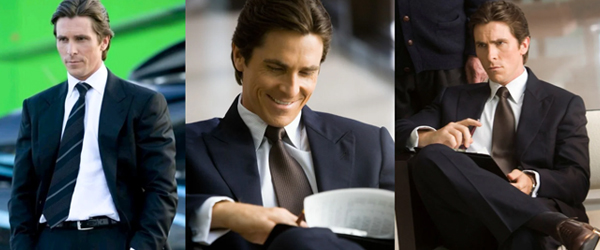
Photo: Movie Web
Armani also worked with Christopher Nolan on The Dark Knight, designing the costumes for Gotham’s most eligible bachelor, Bruce Wayne (portrayed by Christian Bale). Though not involved in the reworking of the iconic Batsuit, Armani carefully curated the image of the Dark Knight’s billionaire alter-ego —elegant, powerful, and quietly commanding. These suits visually distinguished Wayne from Batman, reinforcing Nolan’s psychological approach to dual identity and public facade.
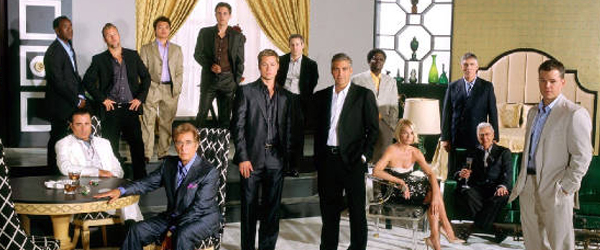
Photo: Warner Bros
For Ocean’s Thirteen, Armani collaborated with Steven Soderbergh, dressing A-list stars like George Clooney and Brad Pitt in attire that perfectly matched the film’s cool, suave tone. Armani’s designs underscored the effortless charm and confidence of the characters, becoming a crucial part of the film’s stylish, contemporary vibe.
Martin Scorsese directs “Made in Milan”

Photo: Made In Milan
Beyond feature films, Armani also had a unique artistic connection with Martin Scorsese, who directed a short documentary about him called Made in Milan (1990). This film offered a rare glimpse into Armani’s creative world and philosophy, emphasizing his obsessive attention to detail and deep understanding of how clothing communicates identity.
Other Notable Collaborations
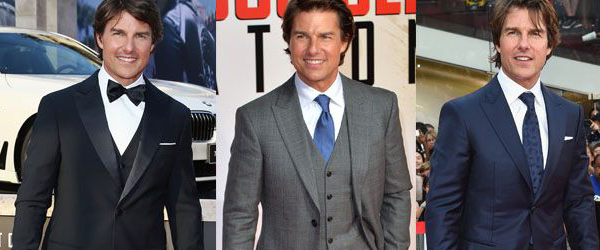
Photo: Red Carpet
Other notable collabs include Tom Cruise, for whom he custom-tailored pieces for the megastar’s personal wardrobe during the 2000s. It is even reported that for Collateral (2004), where Cruise plays a sleek hitman, the costume designer Jeffrey Kurland used obvious details from Armani’s signature looks that it lead to speculation that the late designer’s aesthetic highly influenced the film’s wardrobe.
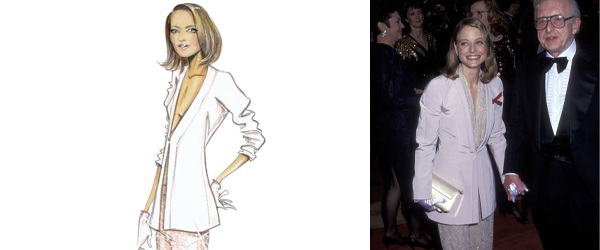
Photo: Golden Globes
Although primarily known for men’s suiting, Armani also attracted the attention of many of Hollywood’s leading ladies. Notably, Jodie Foster wore a custom Armani white pantsuit when she received the Cecil B. DeMille Award at the 2013 Golden Globes—a moment deemed both fashion-forward and symbolically powerful.
Giorgio Armani’s Legacy
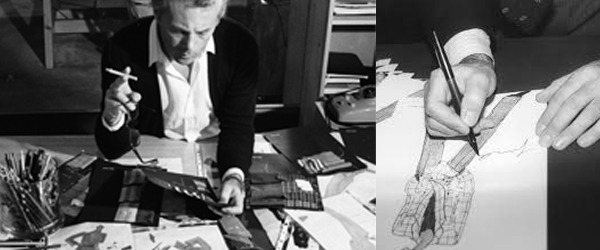
Throughout his career, Armani understood that costume design in film isn’t just about dressing actors—it’s about building characters visually. He worked with directors who valued that vision, turning wardrobe into an extension of storytelling. His minimalist, modern style shaped the visual language of numerous films and helped redefine how fashion and cinema could inform each other in meaningful ways, cementing Giorgio Armani’s legacy as a visionary who bridged both worlds.