How to Dye Satin Shoes using International Fabric Shoe Dye
Author: Cheryl Kilbourne-Kimpton
At Manhattan Wardrove Supply, we get asked how to dye satin shoes a lot. Dyeing satin shoes is different from dyeing clothes or sneakers. You can’t use regular dyes or process them through dunking. Taking them to a shoe repair shop is an option, but it is expensive.
So, can you dye satin shoes yourself? Absolutely. With just a few items, a little patience, and a pair of satin dyeable shoes, you can achieve the ideal shade you are looking for with perfect results.
Below, we will show you how to dye satin shoes.
Where did our shoe dyeing method come from?
Manhattan Wardrobe Supply asked Anthony Hoffman, a well-known shoe painter and dyer on Broadway, for his advice. In addition to Hairspray, Wicked, and Shrek the Musical, Anthony also worked on Kinky Boots, a show that’s nothing without its footwear. It’s clear that there is no one better in the business when it comes to shoe dying.
Few people know shoe dyeing better than Anthony, and we are lucky to share his master method on how to dye satin shoes with you. With his expertise, your custom-dyed satin shoes will turn out spectacularly.
Fabric Dye Colors
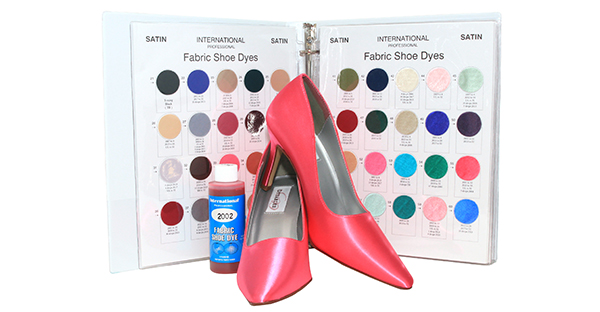
When it comes to choosing colors, fabric dye has a large variety. In fact, this International Fabric Dye has over 20 different colors to choose from. If you have a dyeable shoe and a bottle, the process is really easy – you just need:
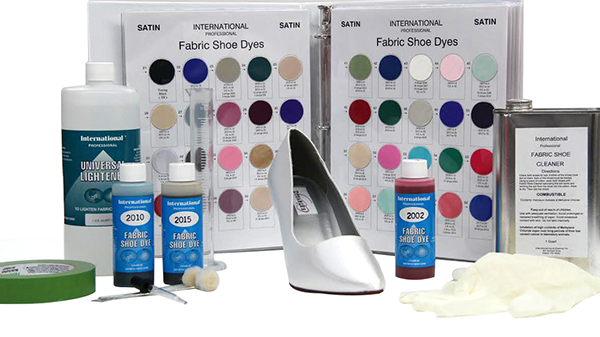
- International Fabric Shoe Dye.
- Rubber gloves – WARNING: alcohol-based satin shoe dye can be toxic if it comes in contact with skin. Protect your hands!
- Daubers – these are the funny-looking things that you dye satin shoes with – they look like a powder puff on a stick. We have both generic and Angelus daubers to buy.
- Masking tape – we like to use Frog Tape to dye satin shoes.
- Paper towels to protect your working surface. You can also use an old sheet.
- If you need to blend a shoe dye for satin shoes, you’ll need some additional supplies:
- International Fabric Shoe Dye Chart. This book contains recipes for approximately 200 satin shoe dye colors. When you want your shoes to match an outfit perfectly, it is extremely handy.
- Mixing Cylinder to dye satin shoes
- Universal Lightener for fabric shoe dye
- Eyedropper (note: not all recipes call for the use of an eyedropper)
How to Dye Satin Shoes?
Now that you have all the supplies you need, it’s time to learn how to dye your satin shoes.
Step 1: Choose your satin shoes
The type of shoes you choose will determine the dye you must use. Some bridal shoes might require a different type of dye, for example.
Check the fabric content of your satin shoe. Alcohol-based dyes will not adhere to polyester satin, so you must choose cotton or silk satin in this case. You can find out the fabric content of your shoes on the side of the shoebox or in the website’s description. Also, in most boxes of white satin shoes, you can find a fabric sample – keep this handy for later as you’ll use it for testing the shoe dye.
Step 2: How to prepare satin shoes for dyeing?
-
Clean Shoes:
If you’re dyeing a used pair of white shoes, such as your worn wedding shoes, clean them first with International Fabric Shoe Cleaner to remove dirt and scuffs. Use a low abrasive cotton t-shirt fabric or a rag for best results. Work in a slow, circular motion, and allow the shoe to dry completely before dyeing. It’s important to clean both shoes in their entirety, even if only one is dirty.
-
Choose the Color:
Determine which color in the International Fabric Dye Chart best matches your color swatch. When selecting a color, consider a shade 10 degrees darker than the outfit, especially if your shoes are for the stage. Very pale, pastel shades on the stage reflect light, making the shade appear white.
-
Prepare staging area:
Before you dye satin shoes, cover your table with something other than newspaper, like an old sheet or tarp. If your shoe should fall over, the print could transfer to the shoe, so avoid anything with a design!
-
Prepare the shoe:
If you’re using a new shoe, little preparation is needed. If the outer sole is leather and you don’t want the dye to stain it, apply masking tape to protect it. Most outer soles are plastic and will simply need a quick wipe with alcohol.
Step 3: How to mix the satin shoe color?
Now it’s time to create the color you want. This part is essential, as before you can learn how to dye wedding shoes (or other white satin shoes), you must have the perfect shade ready and prepared. Often, that involves mixing different dyes.
You can either dye satin shoes or use a straight tint directly from the bottle, skipping the mixing process altogether. If you want a specific shade that isn’t directly available, you must mix the colors.
There are 23 standard international shoe dye colors to choose from.
Select the color from the International Fabric Shoe Dye Color Chart, which has approximately 200 dye recipes, ensuring you will find the perfect match. Always test first on a manufacturer’s swatch of the same fabric as the shoe. Most shoes will have a swatch in the shoebox.
Mix your color according to the recipe using an eyedropper (recipes don’t always call for an eyedropper), graduated cylinder, universal lightener, and dye for satin shoes. Latex gloves should be used during this process as you don’t want the dye to come in contact with the skin. It is also essential to have your satin sample ready for testing. Allow the test swatch to dry to see the true color that will occur on your satin shoes. It can take a little while, so don’t rush!
Mixing color to dye satin shoes is easy if you follow the directions. Consider having a container with a lid handy to keep the solution from evaporating, reducing the need to re-mix.
Step 4 – Dyeing your shoes
-
Use circular motions
Since you are dyeing using an alcohol-based emulsion and not painting, ensure that you work in a small area at a time and gradually cover the whole shoe. Try not to use the cotton dauber to brush in straight lines like you’re painting. Instead, use circular motions to spread the dye. Working in a straight line can cause a striping effect that most will want to avoid. Also, try not to saturate the dauber with the solution when applying. By doing so, you maintain control of the dyeing process and minimize runs, which can cause striping.
-
The order of dyeing your satin shoes
Wearing latex gloves, keep your hand inside the shoe and avoid touching the outside as much as possible, as this could cause clouding or spotting. The order in which you paint should be the heel, back, side, toe, side, inner edge. Repeat this process for a total of two coats of dye. You must avoid oversaturating the shoe when you dye satin shoes.
-
Let your statin shoes dry
Let your satin shoes dry for between 2-4 hours. If you’re in a hurry, you can use a blow dryer, but be sure to apply the heat evenly and don’t blow dry one section for too long. If you use this method, it’s best to keep the blow dryer on a low heat setting.
Helpful Hints on How to Dye Satin Shoes
- Make sure to test the color swatch in the correct light before you dye satin shoes, such as daylight, inside light, or night light.
- Remember, when you dye satin shoes, the dye is not waterproof and will come off if the shoes get wet.
- UL in the Dye Chart Book refers to Universal Lightener.
- TB in the Dye Chart Book refers to Toning Black.
- When applying the dye, stop a small distance from the sole. The dye will flow into the sole by itself.
- Do not allow the fabric of the shoes to be touched by anything while drying.
- To store your dyed shoes, wrap them in tissue paper when dry and then place them in plastic bags.
- Always keep bottles tightly closed or capped after using dye.
Enjoy your satin shoe dyeing project, and don’t forget to share with us how it went on our Facebook, Twitter, Pinterest, or Instagram. We’d love to see how your project turned out.